With a height ranging from 14-19 feet, giraffes have been declared to be the tallest mammals in the world! Within the Giraffa genus, there are currently only four  living species left which are the Giraffa camelopardalis (Fig.1), the Giraffa giraffa, the Giraffa reticulata and the Giraffa tippelskirchi. One unique thing these 4 species share in common is their unusually long neck. This long neck is an evolutionary adaptation that has proved to be advantageous in the lives of giraffes.
Structure of a Giraffe’s Neck
The neck of an average adult giraffe is around 2 meters long which is about 20 times longer than a human neck. Unbelievably the neck of a giraffe and a human 
share the same number of cervical vertebrae, which is 7 (Fig.2). Despite having the same amount of cervical vertebrae, giraffes have longer necks because each vertebrae measures to about 25 centimetres. When connected, these 7 cervical vertebrae make the full length of an adult giraffe’s neck.
How the Long Neck Came to Be
Many scientist have come up with different theories of why giraffes have long necks. According to Jean-Baptiste Lamarck, giraffes got their long necks because they used them a lot. Lamarck essential believed that the more they used their necks, the more bigger and stronger their necks would become. This theory, however, was false.
After a several years a more effective theory was purposed by Charles Darwin. Darwin believed that giraffes got their long neck due to evolution through natural 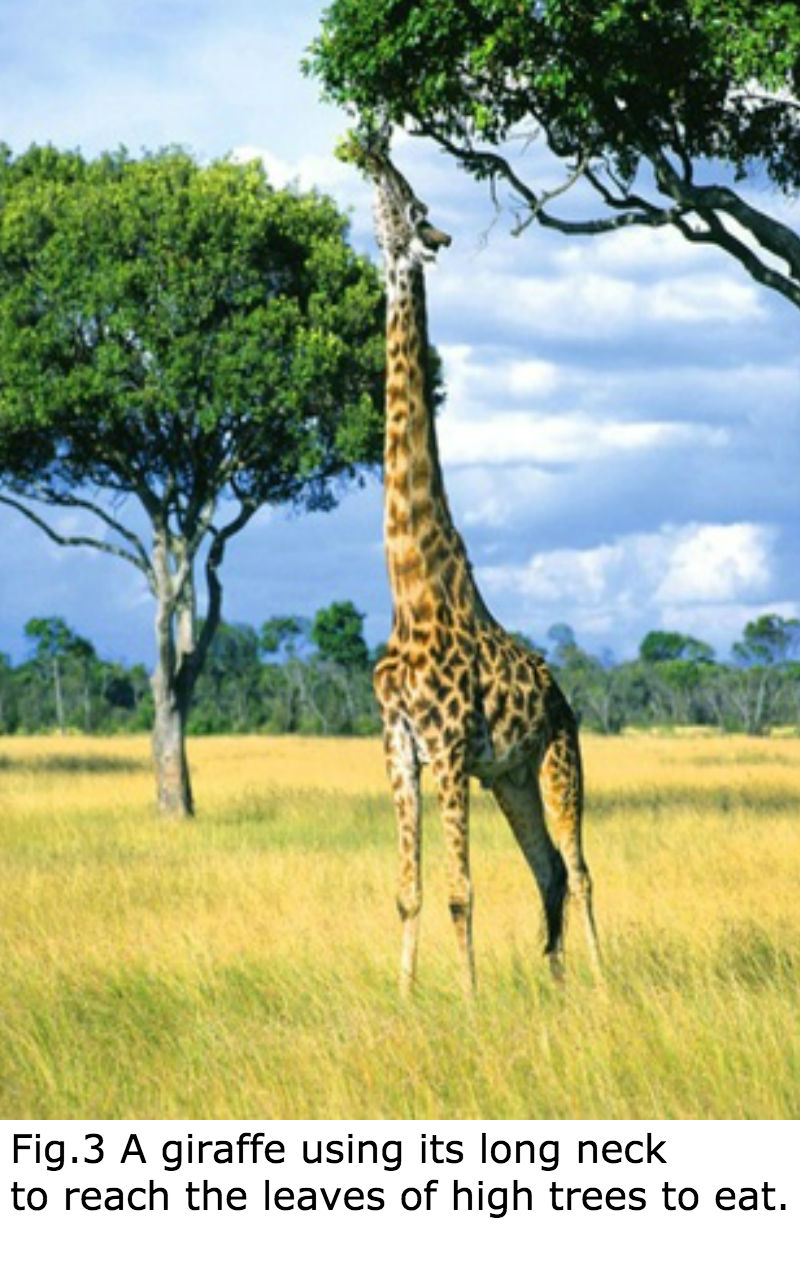
selection. Natural selection in the case of giraffes occurred because there were environmental conditions, such as droughts, that made animals with longer necks have a better survival advantage because they were able to obtain food from higher areas (Fig.3). Since they had this survival advantage, they were given more chances to mate and create offspring to pass their advantageous genes off to. This gene gets passed on from generation to generation until the animal has evolved into the giraffe.
Advantages of a Long Neck
Regardless of why giraffes had this evolutionary adaptation, it served to be beneficial for them. The obvious advantage that the giraffes got from this 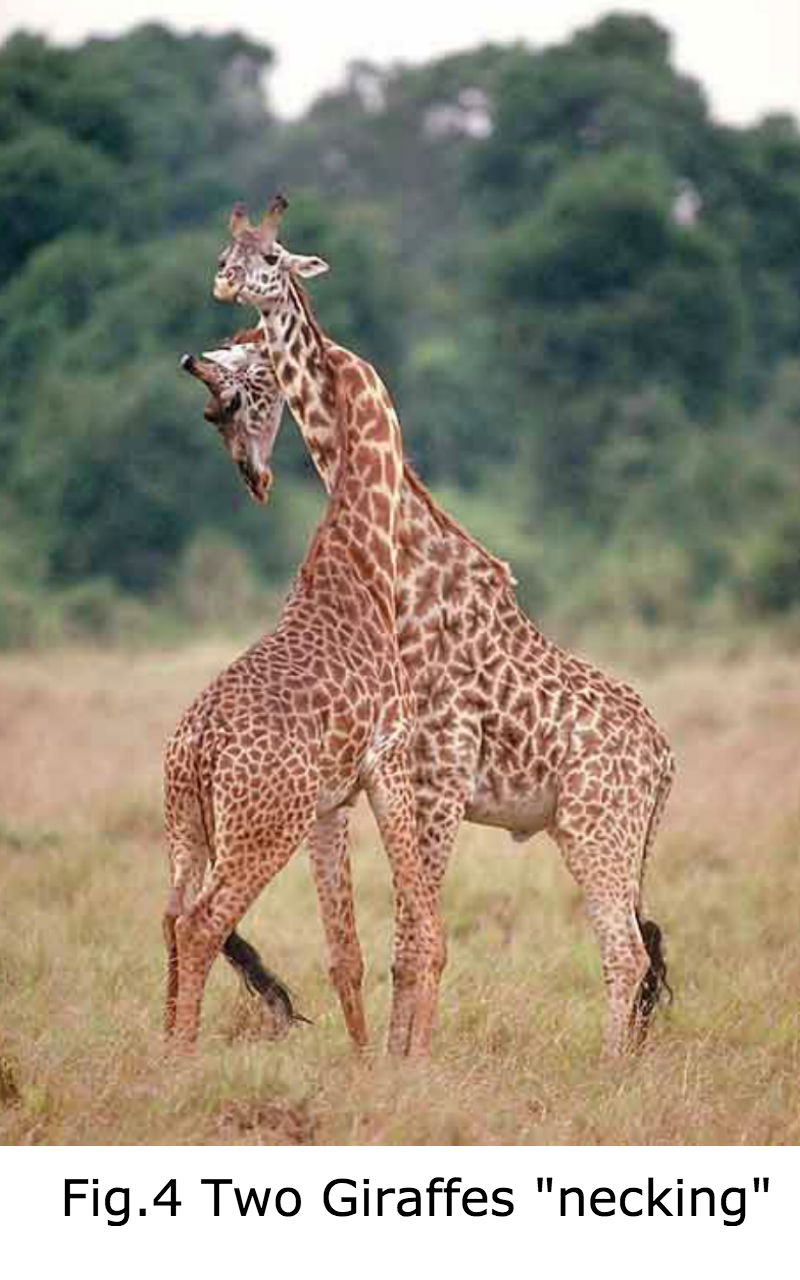
adaptation is the ability to obtain food from high areas (Fig.3). Not only that but having a long neck allows giraffes to see farther distances which makes spotting predators easier.
Giraffes also use their long necks as a mating advantage. Male giraffes would fight each other by “necking”. “Necking” is when the giraffes beat each other by using their necks and head (Fig.4). The giraffe that wins this battle is more appealing to the female giraffes, thus receiving more mating opportunities.
When a Long Neck Becomes a Disadvantage
Though this long neck may be advantageous now, a slight change in the 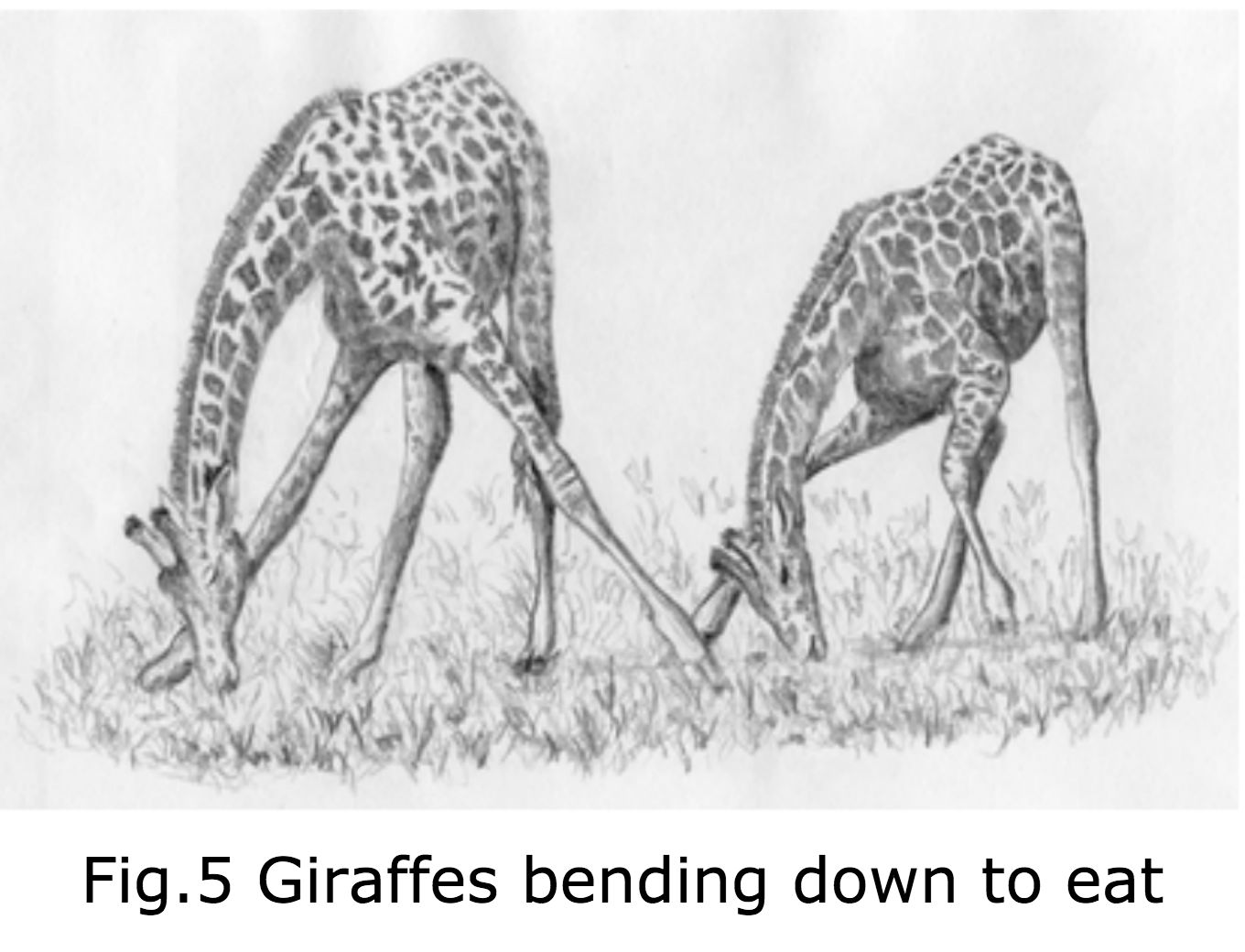
environmental conditions may turn this adaption into a disadvantage. For example, if there was a sudden decrease in food supplies in high areas, the giraffe would suddenly be forced to continuously bend down to obtain food from low areas. Although it is possible for giraffes to bend down, it requires a lot of energy for them to do so. Bending down also makes the giraffe more vulnerable to predators because they are required to angle their legs in a certain position which is not suitable to protect themselves (Fig.5). If an environmental change like this occurred the giraffe’s long neck would serve to be a major survival disadvantage.
Giraffes are unique animals that have gone through many evolutionary adaptions and having a long neck, just so happens to be one of the many advantageous ones.
